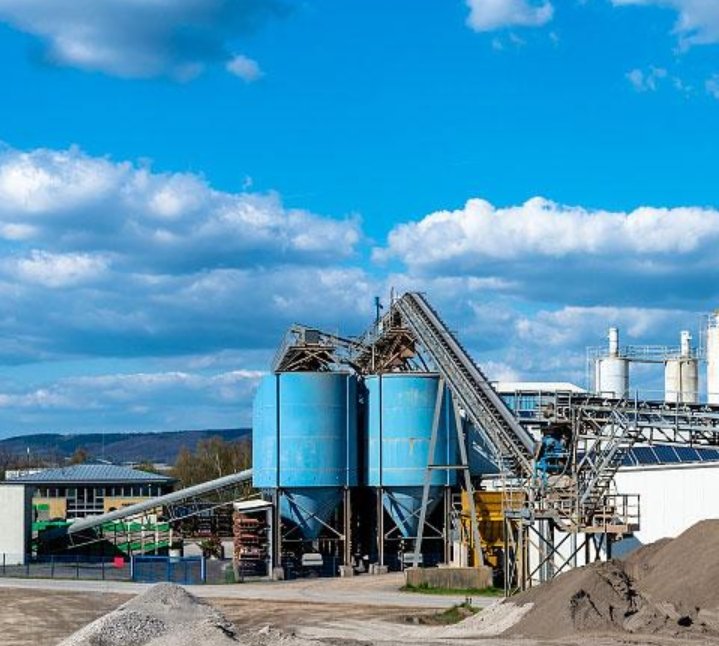
India is one of the world’s largest producers of cement, supplying the foundation for roads, bridges, ports, airports, railways, housing, factories, and urban infrastructure. As construction activity continues to expand, the cement industry faces increasing pressure to improve efficiency, reduce emissions, lower operating costs, and maintain consistent product quality. Industry 4.0 offers an opportunity to transform traditional cement plants into intelligent manufacturing facilities capable of meeting these challenges.
Cement production involves multiple complex processes including limestone mining, crushing, raw material blending, clinker production, grinding, storage, and packaging. Each stage consumes significant amounts of energy and requires precise operational control. Small variations in raw material quality or furnace conditions can affect both production efficiency and the quality of the finished product.
Industry 4.0 begins with connected sensors installed throughout the manufacturing process. These sensors continuously monitor kiln temperatures, fuel consumption, equipment vibration, airflow, pressure, material composition, electricity usage, and production output. Instead of depending on periodic inspections, plant operators receive real time information from every part of the factory.
Artificial intelligence converts this continuous stream of operational data into practical recommendations. AI systems identify production bottlenecks, optimize fuel usage, recommend equipment adjustments, and predict quality variations before they affect finished products. This enables plant managers to make faster and more accurate operational decisions.
One of the most valuable Industry 4.0 technologies is the digital twin. Every cement plant can have a virtual model that mirrors physical operations in real time. Engineers can simulate production changes, evaluate alternative operating conditions, and test maintenance schedules without interrupting actual production. This reduces operational risks while improving overall efficiency.
Predictive maintenance significantly improves equipment reliability. Cement plants rely on expensive machinery including crushers, rotary kilns, mills, conveyors, compressors, and packaging systems. Unexpected failures can stop production for extended periods and generate substantial financial losses.
Sensors measuring vibration, temperature, lubrication, and electrical loads allow artificial intelligence to detect early signs of equipment wear. Maintenance teams receive advance notifications, enabling repairs during scheduled shutdowns instead of costly emergency breakdowns.
Machine vision systems also improve quality assurance. Automated cameras inspect raw materials, clinker quality, packaging accuracy, and finished cement bags throughout production. Artificial intelligence immediately identifies deviations from quality standards, allowing corrective action before defective products reach customers.
Energy management is one of the most important benefits of Industry 4.0 because cement manufacturing is highly energy intensive. Smart energy management systems optimize electricity consumption, kiln operation, waste heat recovery, and fuel efficiency across the entire plant. Even modest improvements in energy performance can significantly reduce operating costs while lowering carbon emissions.
Environmental sustainability has become a major priority for the global cement industry. Smart monitoring systems continuously measure emissions, dust levels, water usage, and waste generation. Digital analytics help manufacturers comply with environmental regulations while identifying opportunities to reduce their environmental footprint.
Supply chain integration extends digital transformation beyond the factory gates. Limestone suppliers, transport companies, warehouses, distributors, construction firms, and retailers can exchange information through integrated digital platforms. Real time inventory management and demand forecasting improve production planning while reducing logistics costs.
Robotics also contributes to smarter cement manufacturing. Automated guided vehicles transport materials across production facilities, while robotic systems perform inspections in hazardous environments where temperatures and dust levels may be unsafe for workers. This improves both productivity and workplace safety.
Worker protection becomes more effective through connected technologies. Wearable devices and environmental sensors monitor worker exposure to heat, dust, noise, and hazardous conditions. Automated alerts improve emergency response while reducing occupational risks.
India’s ambitious infrastructure development programs require reliable supplies of high quality cement produced at competitive costs. Industry 4.0 provides manufacturers with the tools needed to increase productivity while reducing waste and improving environmental performance.
The transition to smart manufacturing does not require replacing every production line immediately. Many cement plants can begin by introducing sensors, digital monitoring systems, predictive maintenance, and artificial intelligence before gradually expanding into digital twins, robotics, and advanced automation.
The cement industry has evolved continuously for more than a century through improvements in engineering and manufacturing technology. Industry 4.0 represents the next major phase of this evolution. By combining artificial intelligence, connected sensors, digital twins, robotics, and intelligent analytics, India’s cement industry can build smarter factories that support sustainable growth while strengthening one of the country’s most important industrial sectors.